

If you’ve ever sat down to plan your marketing budget and felt stuck between two options, you’re not alone. SEO vs PPC is probably the most common question we hear from Fort Worth business owners walking through our door.
Here’s the short version. SEO is the slow, steady climb up Google’s organic results. PPC is paying for a spot at the top right now. Both work. Both cost something, just in different ways.
We’ve run campaigns for landscapers in Benbrook, dentists near TCU, and retail shops downtown. The businesses that do best almost always understand what each channel is actually good for, instead of picking one and hoping for the best.
In this article, we’ll break down what SEO and PPC really are, how they differ in cost and speed, when to lean on each one, and whether running both together makes sense for a business of your size. No jargon, just straight answers. Let’s dig in.
SEO vs PPC: What Each One Actually Means
Let’s clear up the basics first, because a lot of the confusion starts right here.
SEO (search engine optimization) is the process of improving your website so it shows up naturally in Google’s organic results. No fee per click. You’re not paying Google directly for that spot. You earn it through content, site structure, and trust signals built over time.
PPC (pay-per-click) is different. You bid on keywords, write an ad, and pay every time someone clicks it. Turn off the budget, and your ad disappears. Simple as that.
Google’s own resources put it plainly: PPC ads help you show up “at the exact moment” someone is searching, while SEO is about making your site more relevant to searchers over time, and the two aren’t really meant to be pitted against each other so much as used for different jobs. Google’s official breakdown frames it as “SEO and PPC” rather than “SEO vs. PPC,” and honestly, that’s the mindset that serves small businesses best.
Here’s a way to picture it. SEO is like buying property. It takes work up front, but once it’s yours, it keeps paying you back. PPC is like renting a billboard. You get attention right away, but the moment you stop paying, it’s gone.
We had a client, a Fort Worth flooring company, who spent two years running Google Ads. The second they paused the budget during a slow month, their phone stopped ringing completely. Zero organic backup. That’s the risk of leaning on just one channel.
Here’s how we handle it with new clients: we ask what the business needs most right now. Immediate leads? Long-term visibility? That answer usually tells us where to start, not some generic formula.
Curious how this decision plays out for other local businesses? Take a look at our post comparing Fort Worth SEO vs paid ads, or get the bigger picture in our digital marketing Fort Worth overview.
How SEO and PPC Differ in Cost, Speed, and Results
This is where the rubber meets the road for most small business owners. Let’s talk real numbers.
Speed. PPC wins here, no contest. Launch a campaign today, and you can have clicks by this afternoon. SEO usually takes three to six months of steady work before you see real movement, sometimes longer in competitive Fort Worth industries like legal services or home repair.
Cost over time. This one surprises people. PPC costs stay flat or climb. You pay the same rate (or more, if competition heats up) for every single click, forever. SEO costs more up front in time and content, but each page you build keeps working without a per-click charge. One study found that SEO’s ROI tends to run about 25% higher than PPC’s over time, largely because organic traffic doesn’t carry an ongoing per-click cost the way paid search does.
Conversion behavior. Here’s a nuance most articles skip. Organic listings convert at roughly 2.4%, nearly double the 1.3% conversion rate typical of paid search clicks, according to recent industry data. But PPC visitors are often further along and ready to buy, meaning paid clicks can convert faster even at a lower overall rate. Both things can be true at once, which is honestly the most useful way to think about it.
Visibility. Paid ads sit above organic results, and the top three ad positions alone capture close to half of all ad clicks on a page. That’s real estate worth having if the budget allows it.
Unique insight most local agencies won’t mention: the businesses that struggle most aren’t the ones who pick “the wrong channel.” They’re the ones who pick a channel and then quit after six weeks because it didn’t immediately produce a flood of leads. SEO needs months. PPC needs constant small adjustments. Neither is a “set it and forget it” deal.
Frustrated trying to guess which one fits your budget? Here’s a better way. Map your timeline first, then pick the channel that matches it.
For a deeper look at what this costs in practice, check our post on smart PPC strategies for Fort Worth or our Fort Worth PPC advertising guide.
When Fort Worth Businesses Should Choose SEO
SEO makes the most sense when you’re playing the long game. Here’s when we tell clients to prioritize it.
- You want a lower cost per lead over time. Once a page ranks, it keeps bringing in visitors without a per-click bill.
- You’re in a local market with room to compete. Fort Worth has plenty of neighborhoods and niches where the organic competition isn’t as brutal as it looks in Dallas or Houston.
- You want to build real authority. A steady stream of helpful blog posts and service pages builds trust that ads alone can’t replicate.
- Your business relies on repeat, ongoing search demand, like home services, healthcare, or legal work, where people search year-round.
Here’s the honest tradeoff. SEO won’t save a slow month right now. If your calendar is empty next week, SEO isn’t the fire extinguisher you need.
But if you’re building a business you plan to run for the next five or ten years, SEO becomes one of your most valuable assets. It’s the difference between renting attention and owning it.
Let’s make it simple: if you can afford to be patient for three to six months and want a channel that gets cheaper per lead as it matures, start here.
Want help figuring out where your business stands? Our guide on Fort Worth SEO strategies and local SEO in Fort Worth both walk through practical next steps.
When Fort Worth Businesses Should Choose PPC
Now flip it around. PPC earns its keep in a specific set of situations.
You need leads this month, not in six months. Maybe it’s a slow season, or you just opened your doors and need the phone ringing now. PPC delivers visibility within days, sometimes hours.
You’re testing a new offer or service area. Before committing months of content work, a small PPC budget tells you quickly whether people actually want what you’re selling. Run it for two weeks, watch the clicks and calls, and you’ve got real data instead of a guess.
You’re facing sudden demand. A storm rolls through Tarrant County, and suddenly every roofer’s phone should be ringing. PPC can be turned on the same morning to catch that surge. SEO simply can’t move that fast.
You want precise targeting. With Google Ads cost per click bidding, you can aim ads at a specific zip code, age range, or even the exact service someone searched for. That kind of control is hard to match with organic content alone.
Here’s the tradeoff to keep in mind. The moment your budget stops, so does the traffic. There’s no equity built up the way there is with SEO. It’s rented space, not owned property.
Tired of dealing with a marketing spend that disappears the second you pause it? That’s a fair concern, and it’s exactly why we usually recommend pairing PPC with at least some ongoing SEO work, even a small amount, so you’re not starting from zero every time.
See how other Fort Worth businesses use this channel in our post on Google PPC tips for Fort Worth or our breakdown of Fort Worth local services ads.
Can You Run SEO and PPC Together? (Yes, Here’s How)
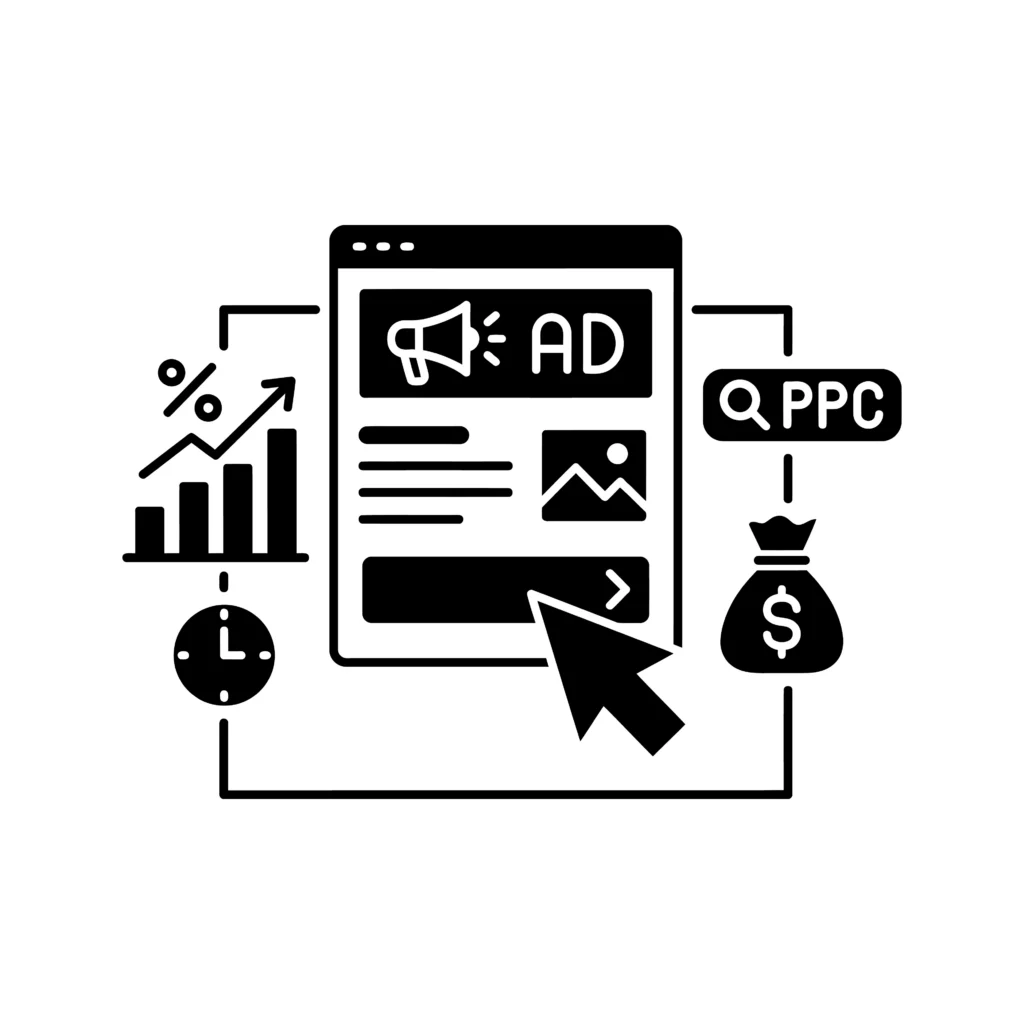
Most Fort Worth business owners don’t need to pick a side forever. The smartest setups usually blend both, just not necessarily at the same intensity from day one.
Here’s a simple way to think about it:
- Start with PPC if you need leads now. Use it to keep the pipeline moving while SEO builds in the background.
- Feed your SEO strategy with PPC data. The keywords that convert well in your ads often make excellent blog topics and service page targets.
- Let SEO reduce your paid spend over time. As organic rankings improve, you can often trim your PPC budget for the same or better lead volume.
- Use both to dominate the page. Showing up in both the paid ad section and the organic results for the same search makes your business look bigger and more established than a competitor who only shows up once.
We’ve watched this play out with a Fort Worth med spa client. They started with PPC to fill their calendar fast, while we built out search engine marketing content and service pages in the background. Eighteen months later, their organic traffic covered nearly half of what PPC used to carry alone, and their overall cost per lead dropped noticeably.
Unique insight here: most competing articles frame this as an either-or decision. In practice, the real skill is knowing when to shift the ratio, more PPC early, more SEO as your site matures, not picking one and sticking with it forever, no matter what.
Here’s how we handle it for clients who want both: start with a heavier PPC weighting in month one, then gradually shift budget toward content and SEO as rankings climb.
If you want to explore what a blended approach looks like for your business, read our post on Fort Worth SEO and paid ads or our comparison of PPC agency vs organic marketing in Fort Worth.
Real Numbers: SEO vs PPC ROI for Small Businesses
Let’s ground this in actual data instead of opinions.
Organic search drives roughly 53% of all website traffic, compared to about 27% from paid search, which shows just how much weight organic listings carry over the long run, based on industry-wide traffic data. That’s a strong argument for not ignoring SEO, even if PPC feels more urgent.
At the same time, paid search visitors convert at a notably higher rate in some studies, with some data showing paid clicks are up to 35% more likely to convert than organic visitors, since ad clickers often arrive with strong buying intent already in place.
So which is “better” for ROI? It genuinely depends on your timeline and how you define return. If you’re measuring cost per lead over a full year, SEO tends to win as rankings mature. If you’re measuring speed to first sale, PPC usually wins.
Unique insight: Most small businesses never actually track this long enough to know the real answer for their own market. We recommend tracking both channels separately for at least 90 days before concluding. Fort Worth’s competitive landscape shifts by industry; what’s true for a plumber isn’t automatically true for a boutique retailer.
Want to actually see these numbers for your business instead of guessing? Our team tracks this monthly for clients, so decisions are based on real data, not gut feel.
Check out our guide on Fort Worth lead generation ROI or our breakdown of Fort Worth marketing metrics to see what to track first.
Quick Takeaways
- SEO vs PPC isn’t really a competition. They solve different problems on different timelines.
- SEO is like owning property; it takes longer to build, but keeps paying off without a per-click cost.
- PPC is like renting a billboard, fast visibility, but it disappears the moment you stop paying.
- Organic search drives more overall traffic (about 53%), while PPC clicks often convert faster due to buying intent.
- SEO makes sense for long-term, repeat-demand businesses. PPC makes sense for urgent needs, testing, and seasonal spikes.
- The strongest strategy for most Fort Worth small businesses blends both, shifting the ratio as your site matures.
- Track results from both channels for at least 90 days before deciding what’s actually working.
Conclusion
So, SEO vs PPC, which one should you actually pick? Honestly, most Fort Worth businesses do best with both, just weighted differently depending on where you are right now.
If you need leads this month, lean into PPC. If you’re building something meant to last years, don’t ignore SEO, even if it feels slower. The businesses we’ve seen thrive long term almost always use PPC to fill gaps while SEO quietly builds equity in the background.
Don’t fall into the trap of picking one channel and walking away from it after a few weeks because the results weren’t instant. SEO needs months. PPC needs ongoing tuning. Neither is a “set it and forget it” solution, and that’s exactly why so many local businesses give up too soon and miss the payoff.
If you want an honest read on which mix fits your business, your budget, and your timeline, we’re glad to walk through it with you. Reach out to our team for a straightforward conversation, no pressure, just real answers based on your situation. Or if you’ve already got a specific question about your current campaigns, get in touch here and we’ll point you in the right direction.
For more on avoiding costly missteps along the way, our post on Fort Worth digital marketing mistakes is worth a quick read, and if you’re still deciding who should handle any of this for you, how to choose the right Fort Worth digital marketing partner breaks down what to look for.

💬 What our clients say:
⭐️⭐️⭐️⭐️⭐️ Steve L.
“Panther City is Fort Worth’s Premier Marketing Agency. The founder and Managing Director, Megan, is an absolute charm to work with. She is very helpful and provides great marketing suggestions for your business. Oh, and did I mention? They are very affordable if your just starting your business. Keep up the great work Panther City Marketing!”
👉 Book a strategy call with us!
FAQs
Is SEO or PPC better for a small business just starting out?
It depends on your timeline. If you need leads immediately, PPC gets you there faster. If you can wait three to six months and want a channel that compounds, SEO usually wins on long-term SEO vs PPC ROI.
How much does PPC cost for a small business in Fort Worth?
It varies a lot by industry. Competitive fields like legal or home repair tend to have higher Google Ads cost per click rates than niche retail or local services. Starting with a modest daily budget and scaling once you see results is the safest approach.
Can I do SEO myself, or do I need an agency?
You can absolutely start SEO yourself; things like claiming your Google Business Profile and writing helpful blog content cost nothing but time. An agency helps when you want faster, more consistent results without doing it all solo.
Does running PPC help my SEO rankings?
Not directly. Google has been clear that paid ads don’t improve organic rankings. But PPC data on which keywords convert can absolutely guide your SEO vs PPC for small business content strategy.
How long should I run PPC before switching fully to SEO?
Most businesses don’t fully switch, they blend both. But if you’re deciding when to lean more on SEO, watch your PPC cost per lead. Once your organic rankings start pulling meaningful traffic, you can usually trim paid spend without losing volume.
References
- Google Ads Resources. SEO vs. PPC: Understanding the Difference. business.google.com/us/resources/articles/seo-vs-ppc