
For small business owners in Fort Worth, standing out online can feel like a challenge. With so many competitors vying for attention, how do you make sure your business shows up when customers are searching for your services? The answer often lies in geo-targeted keywords. These are location-specific search terms that help businesses attract nearby customers who are ready to buy.
In this guide, we’ll explore what geo-targeted keywords are, why they’re essential for local SEO, and how to use them strategically. You’ll discover tools, real-world examples, and actionable strategies for Fort Worth SEO keyword targeting. Whether you’re new to keyword research or looking to refine your local SEO strategy, this article will give you the roadmap to build visibility and credibility in your community.
What Are Geo-Targeted Keywords?
Geo-targeted keywords are search terms that include a location element—such as a city, neighborhood, or region—combined with a product or service. They’re designed to connect your business with people searching for solutions nearby.
For example:
- “Fort Worth HVAC repair”
- “best taco trucks in Fort Worth”
- “near me SEO consultant”
These phrases don’t just describe what people want; they signal where they want it. According to Think with Google, nearly 46% of all Google searches are local, and “near me” searches have grown more than 500% in the past few years.
For Fort Worth businesses, using geo-targeted keywords helps you appear in searches that convert faster. Someone searching “emergency plumber Fort Worth” isn’t casually browsing—they’re ready to hire.
👉 Related resource: Panther City Digital Marketing’s SEO Services
Unique insight: Many businesses forget that micro-locations matter too. Instead of just targeting “Fort Worth,” try “West 7th Fort Worth coffee shop” or “Near TCU hair salon” for hyper-local visibility.
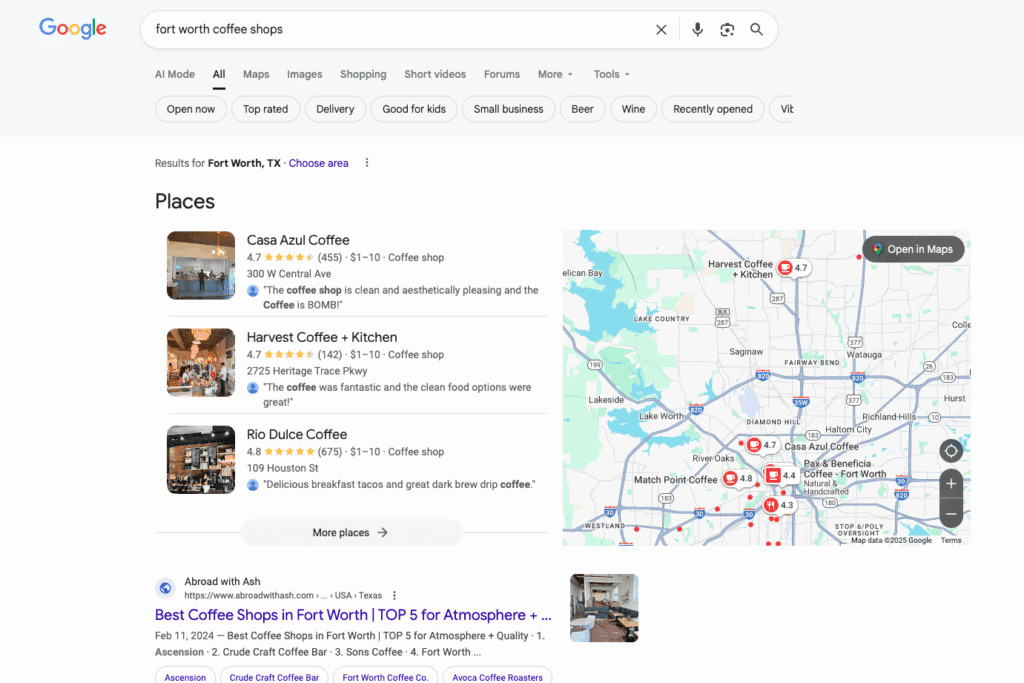
- Example of geo-targeted keywords in Fort Worth Google search
Best Tools for Finding Geo-Targeted Keywords
Google Keyword Planner
Free within Google Ads, this tool shows keyword search volumes and competitiveness. You can filter results by location (like Fort Worth) to see hyper-local data.
Google Trends
Great for spotting seasonal or trending searches. For instance, “Fort Worth crawfish boil” spikes in spring, while “Fort Worth roofing repair” often trends after storms.
SEMrush & Ahrefs
Paid tools that dig deeper into competitor keyword strategies. You can see which Fort Worth SEO keywords competitors are ranking for and identify gaps.
Google Autocomplete & “People Also Ask”
These free features are gold for uncovering long-tail, conversational queries. Start typing “Fort Worth…” into Google and see what pops up.
👉 Learn more: Local Fort Worth SEO keyword research services
Unique insight: Combine keyword tools with local customer surveys. Ask your Fort Worth customers, “What would you type into Google to find us?” You’ll often uncover unique, high-converting phrases that tools alone miss.
Real-World Examples of Geo-Targeted Keywords
To see how geo-targeting works in action, let’s look at examples:
- Fort Worth Restaurants: Instead of just targeting “restaurants,” smart businesses optimize for “Fort Worth Stockyards steakhouse” or “Magnolia Ave vegan restaurant.”
- Service Businesses: A local HVAC company might use “emergency AC repair Fort Worth” or “24-hour heating service near me.”
- Retail Stores: A boutique shop could rank with “Fort Worth handmade jewelry” or “Near Sundance Square gift shop.”
Case study: A Fort Worth dentist shifted from generic “teeth whitening” to “Fort Worth teeth whitening near TCU.” Within 3 months, local traffic increased by 37%, and appointment bookings jumped.
Unique insight: Local modifiers don’t have to be just city names. Use neighborhoods, landmarks, or even highways (e.g., “I-35 Fort Worth car repair”) for niche targeting.
👉 See more strategies at Panther City Digital Marketing.
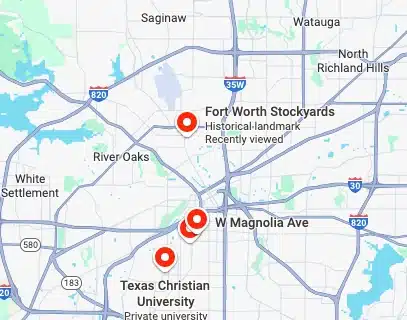
- Examples of micro-locations for geo-targeted keyword strategy
Strategy: How to Use Geo-Targeted Keywords Effectively
On-Page Optimization
- Add geo-targeted keywords in titles, meta descriptions, headers, and content.
- Example: Instead of “Affordable Roofing Services,” use “Affordable Roofing Services in Fort Worth.”
Google Business Profile
Your profile is critical for local SEO visibility. Include services, categories, and descriptions optimized with Fort Worth SEO keywords.
Content Marketing
Create blog posts and guides tailored to your area. Example: “Top 10 Things to Do in Fort Worth This Weekend” or “How to Choose the Best Fort Worth Landscaping Company.”
Local Citations
Ensure consistent NAP (Name, Address, Phone) listings across Yelp, Angi, and directories.
Unique insight: Many businesses forget voice search. People often ask Siri or Alexa: “Where’s the best taco spot in Fort Worth?” Optimize with conversational, natural-sounding Fort Worth SEO keywords for voice search.
- Voice search optimization with Fort Worth geo-targeted keywords

Quick Takeaways
- Geo-targeted keywords connect your business to ready-to-buy customers in your area.
- Use tools like Google Keyword Planner, SEMrush, and Google Trends for Fort Worth SEO keyword research.
- Don’t just target city names—use neighborhoods, landmarks, and conversational long-tail terms.
- On-page optimization, Google Business Profile, and citations all improve local SEO keyword performance.
- Voice search and micro-location targeting are overlooked but powerful.
Conclusion
In today’s competitive digital landscape, relying on generic keywords isn’t enough. To stand out and attract real customers, Fort Worth businesses must embrace geo-targeted keywords as part of their Fort Worth SEO strategy.
By identifying location-specific search terms, you can connect with people actively looking for your services right in their neighborhood. Tools like Google Keyword Planner and SEMrush make the process easier, but the real magic comes when you combine data with local insights from your own customers.
Whether you’re a restaurant near the Stockyards, a roofing company serving North Fort Worth, or a boutique downtown, the right geo-targeted keywords can fuel stronger visibility and conversions through Fort Worth SEO—helping you rise above competitors and capture high-intent traffic.

💬 What our clients say:
“Works to Understand and Optimize Your Business. Megan of MB Marketing asks the questions about your business until she can come up with a plan to increase your revenue in a way that matches your business” – Dave G.⭐️⭐️⭐️⭐️⭐️
If you’re ready to strengthen your Fort Worth SEO keyword targeting, now is the time to put these strategies into action. And if you’d like expert guidance, Panther City Digital Marketing is here to help you turn geo-targeted keyword research into measurable growth.
FAQs
1. What are geo-targeted keywords in SEO?
Geo-targeted keywords are search phrases that include a location element (like “Fort Worth plumber”) to connect local businesses with nearby customers.
2. How do geo-targeted keywords improve local SEO?
They help your business appear in searches where location matters, increasing visibility and attracting high-intent leads ready to convert.
3. What’s the best tool for Fort Worth SEO keyword research?
Google Keyword Planner is a great free option, while SEMrush and Ahrefs provide deeper competitive insights.
4. Can geo-targeted keywords help with voice search?
Yes—phrases like “best tacos near me in Fort Worth” match how people speak when using voice assistants.
5. Should small businesses only target city-level keywords?
No, targeting neighborhoods, landmarks, and hyper-local areas (like “Near TCU” or “Magnolia Ave”) often converts even better.