
If you’ve ever driven down Camp Bowie or through the Stockyards and noticed one business sign that just stuck with you long after you passed it, that’s branding doing its job. That’s exactly what good branding agency services are built to do, make your business memorable enough that people remember you before they remember your competitor.
A lot of Fort Worth small business owners think branding just means a logo. It’s so much more than that. It’s your colors, your voice, the way your website feels, even the tone of your email replies. All of it either builds trust or quietly chips away at it.
We’ve helped local businesses go from “another company with a decent logo” to a name people actually recognize around town. In this article, we’ll walk through exactly how a marketing agency builds a strong brand identity from the ground up, step by step, so you know what to expect and what actually matters. Let’s get into it.
What Branding Agency Services Actually Include
Let’s clear up the confusion first. A logo is one piece of the puzzle. Branding agency services cover a lot more ground than most business owners expect.
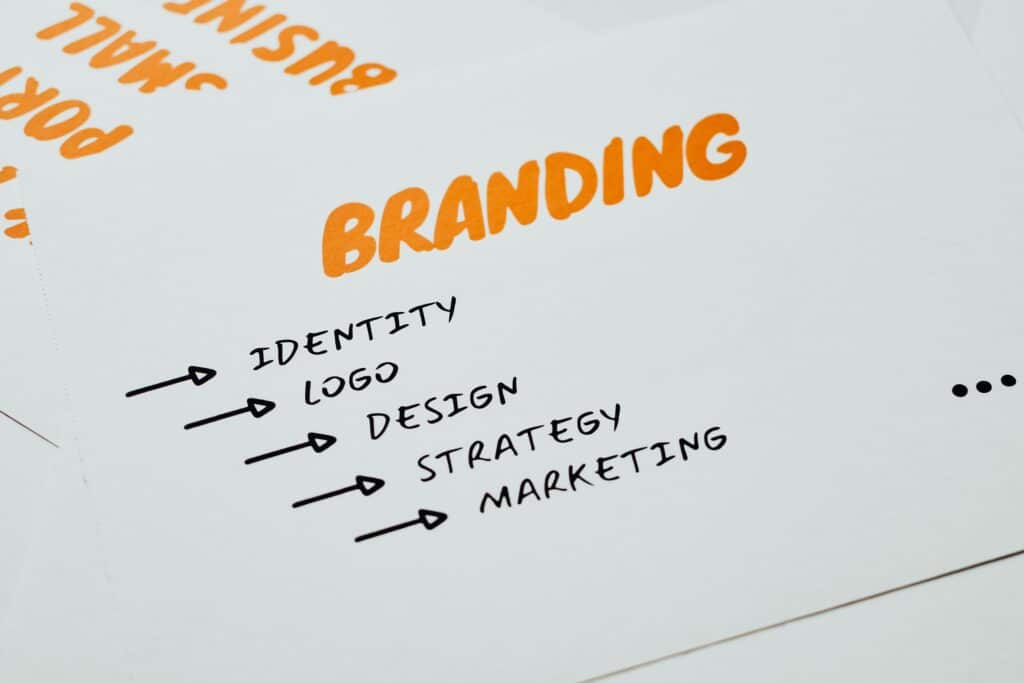
Here’s what’s usually included:
- Brand strategy — figuring out who you are, who you serve, and what makes you different
- Visual identity — logo, color palette, typography, and imagery style
- Brand voice and messaging — how you sound in writing, from your website to your social captions
- Brand guidelines — a reference document so everything stays consistent as you grow
- Rollout support — applying the new identity across your website, signage, and marketing materials
Some agencies stop at the visuals. That’s a mistake. A logo without a clear strategy behind it is just a pretty picture. It doesn’t actually tell your customer why they should pick you over the shop three blocks away.
Here’s something most competing articles gloss over. Branding and marketing aren’t separate projects, they’re connected. Your brand strategy should directly inform your website copy, your ad campaigns, and even how your staff answers the phone. When those pieces don’t match, customers notice, even if they can’t quite explain why something feels off.
We worked with a boutique fitness studio near the Cultural District that had a logo but no real brand voice. Their Instagram sounded playful, their website sounded corporate, and their in-studio signage looked like neither. Once we built out one clear voice and applied it everywhere, their online inquiries picked up noticeably within a couple of months. Same business, same trainers, just a consistent identity people could actually recognize.
Here’s how we handle it with new clients: we never start with logo design. We start with strategy, because guessing at visuals without direction almost always means a redo later.
Want to see how this connects to your broader marketing? Check out our overview of what a full digital marketing agency actually does, or take a look at our thoughts on Fort Worth brand identity specifically.
Step One: Discovery and Brand Strategy
Every solid branding project starts the same way. Not with design software, with questions.
An agency worth hiring will ask about your customers, your competitors, and what you actually want people to feel when they interact with your business. This is the brand strategy agency phase, and it’s the part that’s easy to skip if you’re in a hurry. Skipping it is exactly how businesses end up with a brand that looks fine but doesn’t say anything.
Here’s what discovery usually covers:
- Who your ideal customer actually is (not just “everyone in Fort Worth”)
- What your competitors are doing, so you don’t accidentally look like them
- What makes your business genuinely different
- What tone fits your business: friendly and casual, or polished and formal
Most small businesses assume their competition is the obvious big name in their industry. In our experience, your real competition in Fort Worth is often the business one mile away with a nicer Google listing, not the national chain. Strategy should account for local competition specifically, not just the big players.
A clear brand positioning statement comes out of this phase. It’s a short internal document that answers: who you serve, what problem you solve, and why you’re different. It sounds simple, but writing it forces clarity that pays off in every piece of marketing afterward.
Frustrated because your business “looks fine” but doesn’t stand out? Here’s a better way. Go back to strategy before touching the visuals again. Most rebrands fail because they jump straight to a new logo without answering the harder questions first.
For more on where strategy fits into your bigger marketing plan, take a look at our post on marketing strategy for Fort Worth businesses or our guide to digital marketing strategy in Fort Worth.
Step Two: Visual Identity Design
This is the part people picture when they hear “branding.” Logo, colors, fonts. It matters, but only once strategy is already locked in.
Logo design should be simple enough to work at a small size (think a favicon or a truck decal) and distinct enough that it doesn’t blend into every other logo in your industry. A logo that only looks good as a giant banner isn’t doing its job.
Color palette carries more weight than most owners realize. Color affects recognition more than almost any other visual element, which is exactly why so many national brands guard their specific shades so closely. For a local business, picking two or three colors and sticking with them everywhere, your website, your signage, your social posts, builds recognition faster than people expect.
Typography might feel like a small detail, but inconsistent fonts across your website, invoices, and social media make a business look scattered, even if the work itself is excellent.
Here’s the part competing agencies rarely mention. A visual identity system needs to survive contact with reality. It has to look right on a cheap vinyl banner, a Facebook ad, and a black-and-white invoice, not just a polished mockup. We’ve seen beautiful brand designs completely fall apart the first time a client tried to print business cards, because nobody tested it outside a laptop screen.
Let’s make it simple: if your current logo doesn’t work in black and white, small, and on a mobile screen, that’s worth revisiting before anything else.
Curious how your visual identity connects to your actual website? Our guide on Fort Worth web design strategy and website design in Fort Worth both dig into this.
Step Three: Brand Voice and Messaging
Visuals get someone’s attention. Words are what keep it.
Brand voice is how your business sounds, whether that’s in a blog post, a text confirmation, or a sign in your storefront window. Casual and warm? Confident and direct? Both can work, but only if they’re consistent everywhere your customer sees you.
A solid brand messaging framework usually includes:
- A short tagline or value statement
- Key phrases you return to across marketing
- A tone guide, so a new employee writing a caption sounds like the same business as your website copy
Here’s a mistake we see constantly. A business’s website sounds professional and buttoned-up, while their social media sounds completely different, more like a personal account than a business. Customers notice that disconnect even if they can’t name it. It quietly reads as less trustworthy.
What most agencies skip over: your brand voice should shift slightly by channel without ever changing personality. A slightly more relaxed tone on Instagram and a more direct tone on your website is fine. A completely different personality on each is not. Same person, different rooms, same core character.
Tired of your marketing sounding like three different businesses wrote it? That’s usually a messaging problem, not a design problem, and it’s one of the easier fixes once you know where to look.
Consistent messaging also feeds directly into your content. If you want to see how voice and content marketing connect, check out our post on content marketing in Fort Worth or our guide on blogging for small businesses in Fort Worth.
Step Four: Rolling Out and Maintaining Brand Consistency
Building a brand identity is only half the job. Keeping it consistent is where the real payoff shows up.
Consistent branding isn’t just a nice-to-have. Research from Lucidpress’s brand consistency study found that companies presenting their brand consistently across every touchpoint saw revenue increases ranging from roughly 10% up to 33%, depending on how disciplined the rollout was. That’s not a small number for a local business watching every marketing dollar closely.
Here’s what rollout usually includes:
- Updating your website to match the new identity
- Applying new colors and logo across signage, vehicles, and packaging
- Rewriting key marketing materials to match your new voice
- Creating a short brand guidelines document so future hires or vendors stay consistent
Most small businesses treat brand guidelines as optional paperwork. In practice, it’s the cheapest insurance policy against a brand slowly drifting apart over a few years of different employees, different designers, and different quick decisions made under time pressure.
We worked with a Fort Worth home services company where every truck, every invoice, and every social post used a slightly different shade of the same blue. Small thing, but it made the business look less established than it actually was. A simple guidelines document fixed it within a month, no rebrand required.
Here’s how we handle it long term: quarterly brand check-ins, just a quick look across your website, social channels, and print materials to catch drift before it becomes a real inconsistency problem.
For a deeper look at keeping your brand steady as you grow, read our post on Fort Worth branding strategy or digital branding for Fort Worth professionals.
Why Fort Worth Businesses Need Strong Branding to Compete
Fort Worth’s small business scene is more competitive than it looks from the outside. Between Near Southside, the Stockyards, and the growing number of new businesses opening every month, standing out takes more than good service alone.
Here’s the local reality. Customers are often choosing between three or four similar businesses within a few miles of each other. Local business branding is often the tiebreaker when the services themselves are genuinely comparable. If two contractors quote the same price, the one that feels more established and trustworthy usually wins the job.
National competitors moving into Texas markets often out-advertise local businesses, but they rarely out-brand them locally. A Fort Worth business that leans into being genuinely local, real neighborhood references, real community involvement, a voice that doesn’t sound like a corporate template, can compete with bigger budgets by being more memorable, not louder.
Strong branding also makes every other marketing dollar work harder. Ads convert better when the brand behind them already feels familiar. Referrals happen more often when your name is easy to remember and repeat. Even hiring gets easier, since a recognizable local brand attracts better applicants without extra recruiting spend.
Here’s how we handle it for local clients: we build branding to work specifically for Fort Worth’s competitive landscape, not a generic national playbook that ignores where you actually operate.
If you’re not sure whether your current brand is helping or quietly holding you back, reach out to our team for an honest read. We’re glad to walk through it with no pressure attached.
Quick Takeaways
- Branding agency services cover strategy, visual identity, messaging, and consistent rollout, not just a logo.
- Skipping the strategy phase is the most common reason rebrands fail to actually move the needle.
- Visual identity needs to hold up on a business card and a Facebook ad, not just a polished mockup.
- Brand voice should stay consistent across every channel, even if the tone flexes slightly by platform.
- Consistent branding has been linked to revenue increases as high as 33% in industry research.
- A simple brand guidelines document protects your identity as your team and vendors change over time.
- In a competitive market like Fort Worth, strong local branding is often the tiebreaker between similar businesses.
Conclusion
A strong brand isn’t a nice extra for a small business, it’s often the difference between blending in and actually being remembered. Branding agency services done right cover a lot more than a logo. They cover strategy, voice, visuals, and the consistency that ties it all together over time.
If there’s one thing to take from this, it’s that branding works best when it’s built in order, strategy first, visuals second, consistent maintenance always. Skipping steps is how businesses end up spending money on a new logo that still doesn’t solve the actual problem.
Fort Worth’s small business community is only getting more competitive, and a business that’s easy to recognize and remember has a real edge over one that isn’t, even when the service itself is nearly identical. That edge compounds over time, in referrals, in repeat customers, and in how seriously new prospects take you before they’ve even called.
If your brand feels scattered, outdated, or like it’s not quite working as hard as it should, we’d love to talk through what’s actually going on. Get in touch with our team for a straightforward conversation about where your brand stands today and what a stronger version could look like.

💬 What our clients say:
⭐️⭐️⭐️⭐️⭐️ Julie F.
“Highly recommend Panther City Marketing! Their team completely transformed our online presence and made the whole process seamless.”
👉 Book a strategy call with us!
FAQs
How much do branding agency services typically cost for a small business?
It varies widely based on scope for branding agency services, but small business branding projects are usually far less involved (and less expensive) than large corporate rebrands. Focus on getting strategy and visual identity right first; you can expand from there.
What’s the difference between branding and marketing?
Branding defines who you are and how you’re perceived. Marketing promotes what you sell. Good marketing works much harder when it’s built on a clear brand identity instead of guessing at messaging every time.
How long does it take to build a brand identity?
Most small business branding projects take anywhere from a few weeks to a couple of months, depending on how much strategy work and stakeholder input is involved. Rushing this phase usually shows up later as inconsistency.
Do I need a full rebrand, or just brand guidelines?
If your logo and colors are solid but everything feels inconsistent across channels, a brand guidelines document may be all you need. A full rebrand makes sense when the identity itself no longer reflects the business.
Can a small business really compete with bigger brands through branding alone?
Yes, especially locally. A full-branding agency services approach that leans into genuine local identity often outperforms a bigger competitor’s generic, corporate brand voice, particularly in a market as community-driven as Fort Worth.